If you’re searching “electrician TAFE,” you’re likely trying to figure out which course leads to a licence, how apprenticeships fit in, and whether to choose TAFE NSW or Charles Darwin University (CDU TAFE).
I’ll walk you through what Electrician TAFE is, how the pathway works, and how to compare providers.
Table of contents
What is Certificate III in Electrotechnology, and why it matters for licensing?
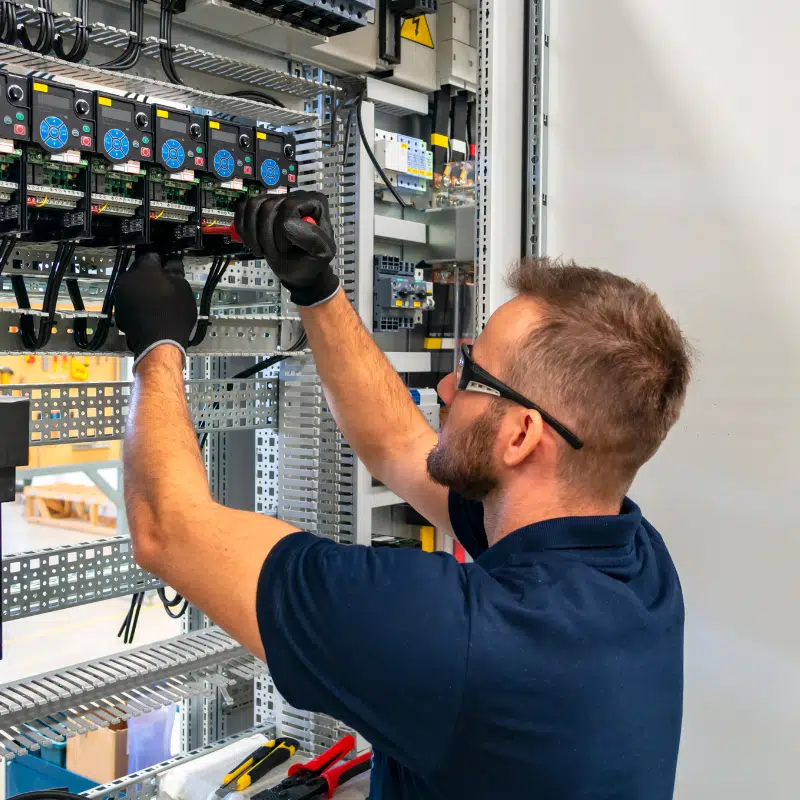
UEE30820 is the nationally endorsed Certificate III qualification that underpins most electrician apprenticeship pathways in Australia.
Completing it (usually while employed as an apprentice) plus meeting your state/territory regulator’s requirements is a common route to an unrestricted electrician licence.
What skills it covers and what ERAC/TRA expect
The Certificate III builds competence in installing, testing, and maintaining electrical systems, reading schematics, safety procedures, and fault-finding.
On the compliance side, licensing frameworks are coordinated by Electrical Regulatory Authorities Council (ERAC).
Skills recognition for migrants and some pathways may involve Trades Recognition Australia (TRA).
Exact licensing steps and any final “capstone”/assessment vary by jurisdiction—always check your local regulator.
Certificate II vs Certificate III (quick differences)
- Certificate II: entry-level electrotechnology awareness and basic skills; good for testing your interest or preparing for an apprenticeship, but not a licensing endpoint.
- Certificate III (UEE30820): the standard trade qualification for electricians, typically completed through an apprenticeship and aligned with licensing requirements.
Where to study: TAFE NSW vs CDU TAFE (locations, delivery and scheduling)
Both providers deliver UEE30820; the right pick depends on where you live and how classes are scheduled around your work.
Real-world duration, block training and workshop time
UEE30820 is commonly delivered over multiple years alongside paid employment as an apprentice. Training can be arranged in blocks, day release, or blended modes.
Your employer agreement and campus timetable will determine how often you’re in the workshop vs. on the job.
Locations and facilities at a glance
- TAFE NSW: broad campus network across New South Wales (e.g., Sydney and surrounds), with purpose-built electrotechnology labs.
- CDU TAFE: strong presence in the Northern Territory (e.g., Alice Springs and Casuarina), geared to local industry and remote/regional delivery.
Comparison table: TAFE NSW vs CDU TAFE
| Factor | TAFE NSW | CDU TAFE |
|---|---|---|
| Primary regions | New South Wales (metro + regional) | Northern Territory (metro + regional) |
| Typical delivery | Block or day-release (campus-dependent) | Block or blended (campus-dependent) |
| Workshop facilities | Dedicated electrotechnology labs across major campuses | Hands-on trade training facilities aligned to NT industry |
| Pathway focus | Broad industry links in NSW; multiple campus choices | Strong NT employer connections; regional access |
| Support & FAQs | Extensive enrolment, funding and student-support info | Clear info on RPL, apprenticeships and how to apply |
| Good fit for… | Learners based in NSW wanting campus choice and proximity | Learners in NT or considering regional training options |
Tip: Campus pages often list intakes, study load, and pre-enrolment requirements. Note any electrical maths or language, literacy, numeracy (LLN) checks before you apply.
Step-by-step: from enrolment to the “capstone” (including your apprenticeship)
How to apply/enrol and documents you’ll usually need
- Find a seat + employer: Many students secure an apprenticeship employer first; others apply for the course and then match with employers.
- Gather documents: ID, school records/Year 10–12 or equivalent, resume, any prior trade units.
- Pre-training review: You may complete LLN checks or suitability interviews.
- Training plan: Your provider, you, and your employer agree on units, schedule, and supervision.
- Safety & PPE: Expect induction and required PPE for workshops.
RPL pathway: save time if you already have skills
If you’ve worked around electrical systems or hold related units, ask about Recognition of Prior Learning (RPL).
Evidence can include work logs, references, or prior study. A strong RPL application can shorten your timeline—useful for career-changers and up-skillers.
Costs and funding: subsidies, VET Student Loans and scholarships
Fees vary by state, concession status, and whether your training is subsidised. Some programs are eligible for VET Student Loans; others use state funding or employer contributions.
Always read the fine print: census dates, refund rules, and any capstone/assessment fees.
What to watch in the fine print
- Eligibility (citizenship/residency, state of residence, employer arrangements).
- Apprentice wage/classification (covered by your employment contract/award).
- Extra costs (PPE, textbooks, tools).
Career outcomes and indicative pay
Common outcomes include licensed electrician, electrical fitter, and roles in construction, maintenance, and industrial settings.
Pay scales depend on your jurisdiction, enterprise agreements, and experience. To boost employability while studying, build a portfolio of installation photos (with permission), job logs, and supervisor references.
Electrician vs electrical fitter vs A-grade electrician
- Electrician (general): installation, testing, fault-finding across domestic, commercial, and industrial.
- Electrical fitter: more bench/industrial assembly and maintenance.
- A-grade (where relevant): fully licensed practitioner meeting local regulator standards.
Explore our Free TAFE Courses hub to compare funded programs, check eligibility, and lock in upcoming start dates—ideal if you want to test a pathway or add job-ready skills while you line up your apprenticeship.
Quick FAQs about Electrician TAFE
Can I start without an employer?
Some campuses allow you to start the off-the-job component, but most candidates benefit from securing an apprenticeship early so the workplace hours align with training.
What maths do I need?
Expect electrical calculations, circuitry, and safe isolation procedures. If you’re rusty, ask for bridging or support classes.
What’s the quickest you can become an electrician?
The shortest path to becoming a qualified, licensed electrician typically involves a 4-year apprenticeship, but you can get foundational skills faster with pre-apprenticeship courses (10 weeks to 6 months) for roles like trainee or in specialized areas, though these don’t grant full trade qualification immediately.
How do I become an electrician in Australia?
Complete a Certificate III in Electrotechnology Electrician (UEE30820) as part of an apprenticeship. This typically takes 4 years and includes structured training through a registered training organisation and workplace experience.